
We only recommend using Solid Carbide CNC Router bits or Carbide Tipped bits in our CNC machines due to the high RPM and material removal rates our CNC machines can reach. Please ensure the CNC Router bits you use are rated to the RPM available from the spindle. Not all endmills or handheld router bits are suitable for CNC router.
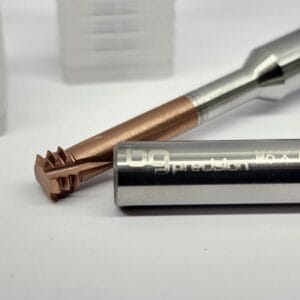
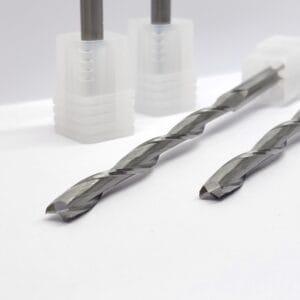
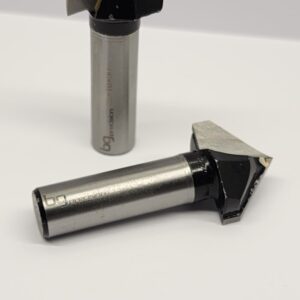
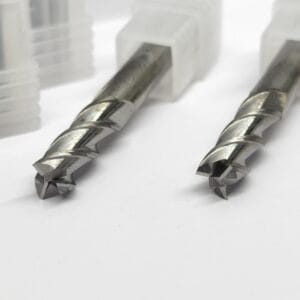
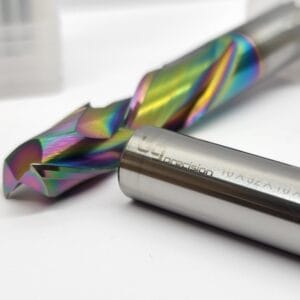
The advantage of carbide over other alternatives is long tool life thanks to its hardness with well-matched rigidity and finish. Some basic terms to start off are outlined below:
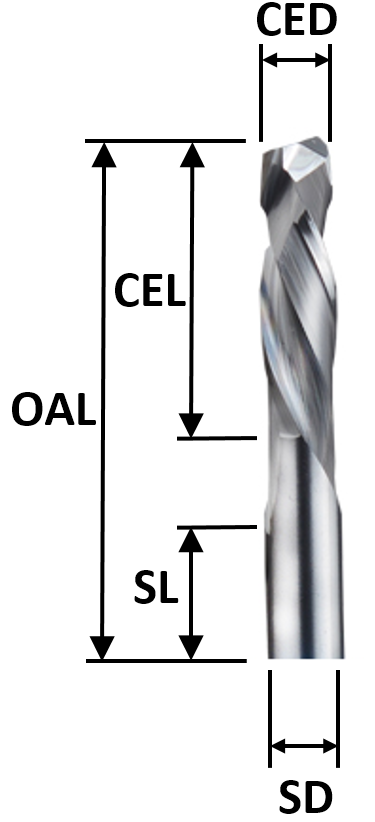
Common dimensions of the tools you need to be aware of are:
CED – Cutting Edge Diameter
CEL – Cutting Edge Length
OAL – Over All Length
SL – Shank Length
SD – Shank Diameter
In choosing a cutting tool for any application, always select one with the shortest cutting edges and the shortest overall length that will reach the required cut depth. Excessive length intensifies deflection and vibration, which degrade cut quality and lead to tool breakage
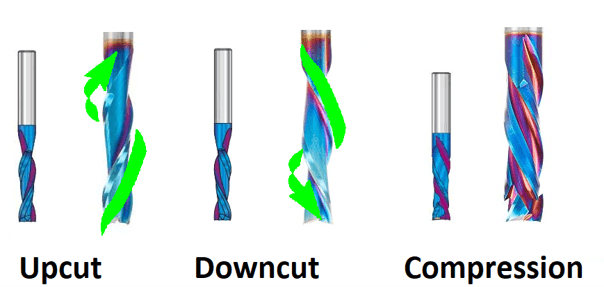
The spiral edges on your cutting tools are known as flutes. The sole purpose of the flutes are to clear the cut chips while minimizing friction on the workpiece. Nearly all tools are design for clockwise rotation, and your spindle is set to spin in a clockwise direction only. Depending on the direction of spiral of the flute, it will determine in which direction your chips will go.
If the spiral of the flute is spiraling up when the tool spins clockwise, this is known as Upcut. When the spiral of the flute is spiraling down when the tool spins clockwise, this is known as Downcut. It is worth noting that this spiral rotation will exert a force on your workpiece.
In choosing a cutting tool for any application, always select one with the shortest cutting edges and the shortest overall length that will reach the required cut depth. Excessive length intensifies deflection and vibration, which degrade cut quality and lead to tool breakage
Ready to buy CNC Router bits? Check out our tools here: Cutting Tools – BG Precision
UPCUT:
The Up-Cut Router Bit yields an especially clean & accurate cut, while effectively clearing chips from the cut. The “up-cut” shears from the bottom up, pulling chips from the bottom up, thus allowing deeper penetration with less stress on the tool.
The advantage of an Upcut bit is it will eject and force all the chips up and out of the cut. Making them very efficient at clearing chips. There are two major drawbacks of this to consider especially when working with timber. It had the tendency to cause tear-out of the material at the surface on the top edge and also wants to lift the material off the bed
Applications:
- Cutting inlay pockets and shaping components
- Shaping / routing hardwoods and softwoods
- General purpose soft media machining
Excellent for Cutting:
- Aluminium
- Wood
DOWNCUT:
The ‘Down-Cut’ cuts from the surface down leaving a smooth edge at the surface. Due to the downward flute geometry this router bit provides better work hold down, reduces material tear out on the surface and can reduce vibration when cutting thinner sheets. Down-Cut router bits are excellent for creating grooves, super effective on surface operations and dado cuts in plywood and composite materials.
The advantage of the Downcut bit, since the spiral of the flute is down, is that the material is forced back onto the bed and leaves a much cleaner top edge. The disadvantage is the chips are being ejected in a downward direct back into the cut reducing dramatically the chip clearance capabilities of the tool. There is also a tendency to tear-out the bottom edge.
For best results you can consider using a downcut tool for the first initial cut deep enough to cut into the surface of the material but shallow enough to still promote chip ejection. Then you could change to an Upcut bit to finish cutting through the material with a more aggressive pass depth to save time and noting the upcut will produce a better finish on the bottom edge. Do not forget the upcut does tend to lift your material so ensure its well clamped.
Applications:
- Cutting inlay pockets and shaping components
- Shaping / routing hardwoods and softwoods
- General purpose soft media machining
Excellent for Cutting:
- Laminate
- Melamine
- Melamine Particle Board
- MDF
- Veneered Plywood
- Wood
COMPRESSION CUTTER:
Compression end mills combine up-cut and down-cut geometry which provide a superior cut at greater depth than traditional upcut or downcut router bit. These bits are designed to leave clean edges on the top and bottom faces of any material. The compression bit’s unique design pulls chips upward at the bottom of the material and downward at the top face, producing chip-free surfaces that are perfect for cabinet and furniture parts.
The bottom section of the compression cutter is ground like an upcut and then there is a turning point, usually at a height the same as diameter of the tool, where the cutter is ground like a downcut. This results when used correctly a clean top edge and clean bottom edge. For this to work you must ensure your first pass depth is greater than the changing point between upcut and downcut.
Applications:
- Profile cutting
- Cabinet making
- Shaping / routing hardwoods and softwoods
Excellent for Cutting:
- Laminate
- Melamine
- Melamine Particle Board
- MDF
- Veneered Plywood
- Wood
Single or Oflute
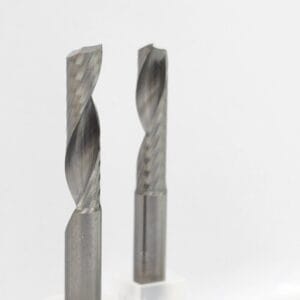
Single Flute or OFlute have the ability for large chip removal, with single flute, up-cut design. The large, polished flute enables a very good chip clearance, less chance for chip re-welding, a superior surface finish and a longer tool life.
With a high rake angle and relatively low helix, O-flute cutters manage to cut acrylic, polycarbonate, ABS, PVC and a host of other sheet polymers at very high chiploads without raising a burr or fracturing the edges of the kerf. Single Flute Router bits are good for high precision cutting of all plastics, and they are very suited to cut Aluminium and Aluminium Composite Material also.
Foam Router Bits
Foam router bits are specialized cutting tools designed to slice, carve, and mill low-density and high-density foam materials cleanly without melting, tearing, or gumming up the edges.
The up-cut high helix angle ejects chips away even when doing a very deep cut in foam.
Excellent for Cutting:
- Crosslinked Polyethylene Foam (XLPE)
- Ethylene-vinyl Acetate Foam (EVA)
- Expanded Polypropylene (EPP)
- Expanded Polystyrene (EPS)
- Extruded Polystyrene Foam (XPS)
- Flexible Polyurethane Foam (FPF)
- Polyethylene (PE) Foam
- Polyurethane Foam

Leave A Comment